BEGIN:VCALENDAR
VERSION:2.0
PRODID:IEEE vTools.Events//EN
CALSCALE:GREGORIAN
BEGIN:VEVENT
DTSTAMP:20250330T234613Z
UID:85170EA9-1DF4-41DA-BD56-E3F0A14106CC
DTSTART;TZID=Etc/UTC:20250417T120000
DTEND;TZID=Etc/UTC:20250417T130000
DESCRIPTION:[LLMs\, Optimization\, and Game Theory]\n\nSpecial Presentation
by Dr. Samson Lasaulce (Khalifa U.\, UAE)\n\nHosted by the Future Network
s Artificial Intelligence & Machine Learning (AIML) Working Group\n\nDate/
Time: Thursday\, 17 April 2025 @ 12:00 UTC\n\nTopic:\n\nLarge Language Mod
els (LLMs)\, Optimization\, and Game Theory\n\nAbstract:\n\nIn this talk\,
we will explore the interplay between large language models (LLMs) and op
timization. After introducing a use case (consumption power scheduling) fo
r which studying this interplay is fully relevant\, we will survey the mai
n approaches in this area\, which include pure LLM-based approaches (e.g.\
, to deal with math word problems) and combined approaches. Both limitatio
ns and promising solutions will be discussed. Application to radio resourc
e management and to telecommunications more generally will also be address
ed. In the last part of the talk\, connections between LLMs and game theor
y will be discussed.\n\nSpeaker:\n\n[]\nSamson Lasaulce is a Chief Researc
h Scientist with Khalifa University. He is the holder of the TII 6G Chair
on Native AI. He is also a CNRS Director of Research with CRAN at Nancy. H
e has been the holder of the RTE Chair on the "Digital Transformation of E
lectricity Networks". He has also been a part-time Professor with the Depa
rtment of Physics at École Polytechnique (France). Before joining CNRS he
has been working for five years in private R&D companies (Motorola Labs a
nd Orange Labs). His current research interests lie in distributed network
s with a focus on optimization\, game theory\, and machine learning. The m
ain application areas of his research are wireless networks\, energy netwo
rks\, social networks\, and now climate change. Dr Lasaulce has been servi
ng as an editor for several international journals such as the IEEE Transa
ctions. He is the co-author of more than 200 publications\, including a do
zen of patents and several books such as "Game Theory and Learning for Wir
eless Networks: Fundamentals and Applications". Dr Lasaulce is also the re
cipient of several awards such as the Blondel Medal award from the SEE Fre
nch society..\n\nCo-sponsored by: Future Networks Artificial Intelligence
& Machine Learning (AIML) Working Group\n\nVirtual: https://events.vtools.
ieee.org/m/474729
LOCATION:Virtual: https://events.vtools.ieee.org/m/474729
ORGANIZER:baw@ieee.org
SEQUENCE:41
SUMMARY:Large Language Models (LLMs)\, Optimization\, and Game Theory
URL;VALUE=URI:https://events.vtools.ieee.org/m/474729
X-ALT-DESC:Description:
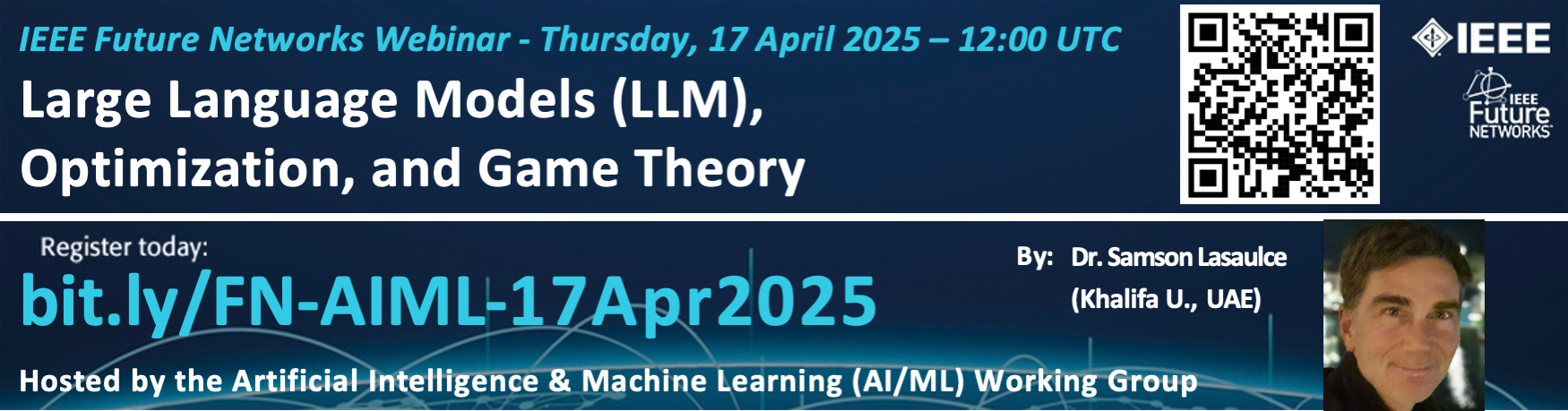
\nSpecial Presentation by Dr. Samson Lasaulce (Khalifa U.\
, UAE)
\nHos
ted by the Future Networks Artificial Intelligence &\; Machine
Learning (AIML) Working Group
\nDate/Time: Thursday\, 17 April 2025<
/strong> @ 12:00 UTC
\nTopic:
\nLarge Language Models (LLMs)\, Optimization\, and
Game Theory \;
\nAbstract:
\nIn this talk\, we will explore the interplay between large language
models (LLMs) and optimization. After introducing a use case (consumption
power scheduling) for which studying this interplay is fully relevant\, w
e will survey the main approaches in this area\, which include pure LLM-ba
sed approaches (e.g.\, to deal with math word problems) and combined appro
aches. Both limitations and promising solutions will be discussed. Applica
tion to radio resource management and to telecommunications more generally
will also be addressed. In the last part of the talk\, connections betwee
n LLMs and game theory will be discussed.
\nSpeaker:
\n\n\n\n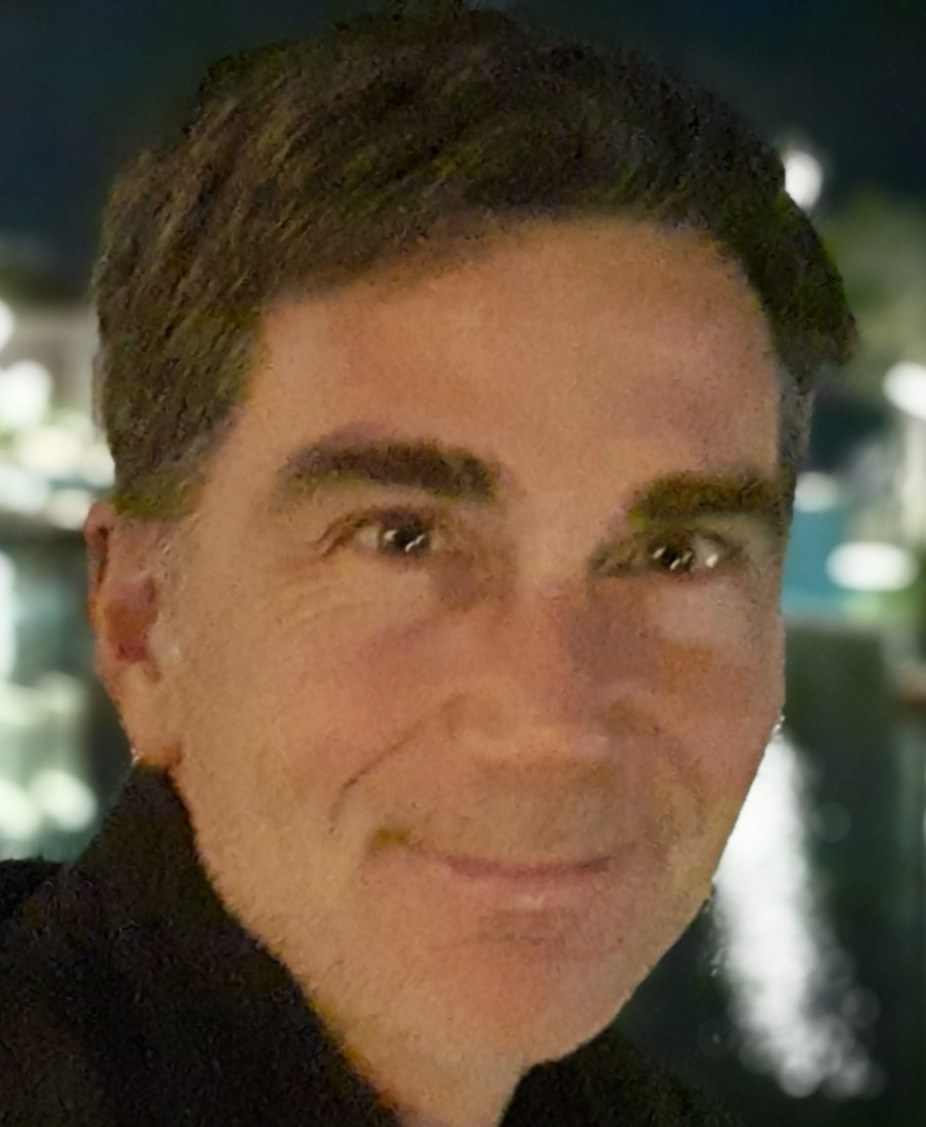 | \n\n Samson Lasaulce is a Chief Research Scientist
with Khalifa University. He is the holder of the TII 6G Chair on Native AI
. He is also a CNRS Director of Research with CRAN at Nancy. He has been t
he holder of the RTE Chair on the "Digital Transformation of Electricity N
etworks". He has also been a part-time Professor with the Department of Ph
ysics at É\;cole Polytechnique (France). Before joining CNRS he has
been working for five years in private R&\;D companies (Motorola Labs a
nd Orange Labs). His current research interests lie in distributed network
s with a focus on optimization\, game theory\, and machine learning. The m
ain application areas of his research \;are wireless networks\, energ
y networks\, social networks\, and now climate change. Dr Lasaulce has bee
n serving as an editor for several international journals such as the IEEE
Transactions. He is the co-author of more than 200 publications\, includi
ng a dozen of patents and several books such as "Game Theory and Learning
for Wireless Networks: Fundamentals and Applications". Dr Lasaulce is also
the recipient of several awards such as the Blondel Medal award from the
SEE French society.. \n \; \n | \n
\n\n
END:VEVENT
END:VCALENDAR